Caring for Our Neighbor on the Road: A Public Health Perspective from Belize
Living in Belize during my sabbatical has brought many public health realities into sharper focus, but few feel as immediate or as personal as road traffic injuries. This is not a distant statistic. Nearly everyone I’ve met has a story: a friend, a cousin, a neighbor, a classmate. Losses from road accidents show up in everyday conversations in a way that is both sobering and hard to ignore.
Globally, the World Health Organization estimates that road traffic injuries claim 1.19 million lives each year (2026). In Belize, the burden is even more pronounced, with a higher-than-average mortality rate and a disproportionate impact on motorcyclists, cyclists and pedestrians. It is the fifth leading cause of death for males and the 8th leading cause of death overall (WHO, 2024). But statistics only go so far. Here, road safety is not just a policy issue, it is personal.
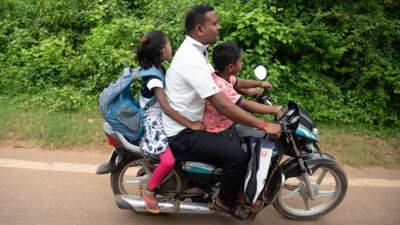
One conversation has stayed with me. A local colleague shared something her grandmother told her: “If you’re going to buy a motorcycle, you might as well buy a coffin to go with it.” It is a stark statement, but it reflects a lived reality. Motorcycles are common, practical and often necessary, but they also carry significant risk, especially when helmets are not consistently worn or enforced, and when alcohol, speed or road conditions come into play.
What stands out most is how preventable so many of these injuries are. We often focus on individual behavior, wear your seat belt, do not drink and drive, put on a helmet. But living here has been a reminder that behavior does not exist in a vacuum. It is shaped by systems: how consistently laws are enforced, how roads are designed, whether safety equipment is accessible and affordable, and what kind of education people receive from a young age.
Some of the realities are hard to miss. At night, lighting can be limited, yet many people walk along the roads. Combined with frequent speed bumps and varying road conditions, it creates an environment where driving after dark feels risky. I have found myself thinking more than once that I would not want to be on the road at night. It is also not uncommon to see a motorcycle driver wearing a helmet while a child passenger rides without one or to notice seatbelts going unused and child car seats missing altogether. Enforcement seems inconsistent. At the same time, there are signs of progress, including new laws, increased penalties and national efforts to strengthen road safety. The challenge is translating those policies into everyday habits.
What gives me hope is the opportunity for community-driven change. This is not a problem that requires one sweeping solution, but many small, steady efforts: education in schools, partnerships with local police, visibility campaigns for pedestrians and cyclists and conversations that gradually shift norms. Even simple actions, like distributing reflective gear and helmets or hosting a school-based road safety workshop, can help build a culture where safety is expected, not optional.
In public health, we talk about addressing root causes rather than just responding to outcomes. Road traffic injuries are a clear example. They are predictable and preventable. And with the right combination of awareness, enforcement and community engagement, they are reducible.
But beyond all of that, this issue comes back to people. Recently, a funeral procession passed by our house in Belize for someone who had died from a road traffic injury. It was a quiet but powerful reminder that these are not just numbers or policy discussions. They are lives, families and communities changed in an instant.
For many in our Concordia community, this reality has felt especially close in recent days. A serious accident involving students has been a sobering reminder that road safety is not distant or theoretical. It touches our own community in real and painful ways.
That reality changes how you see things. It makes the work feel urgent, not just as a professional responsibility but a personal one. As Christians, we often talk about loving and caring for our neighbor, and sometimes that calling is lived out in very ordinary, practical ways. Choosing to slow down, to wear a seatbelt, to put a helmet on a child, to stay alert on poorly lit roads and to avoid drinking and driving are everyday choices, but they are also acts of care.
In that sense, road safety becomes more than prevention. It becomes part of our vocation, a daily opportunity to protect the lives God has entrusted to our communities and to reflect that care in the way we move through the world.
Inspired to make a difference through prevention, education and community health? Concordia University, Nebraska’s Master of Public Health program prepares students to address real-world health challenges with knowledge, compassion and purpose.
About the Author
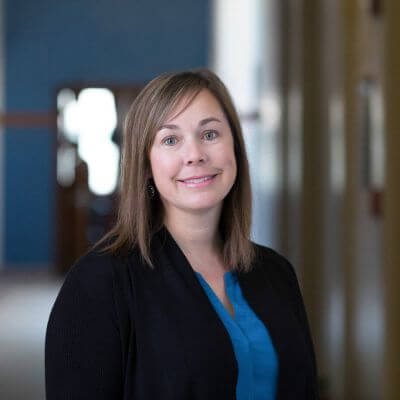
Dr. Jen Janousek has served at Concordia University, Nebraska since 2001, where she is a professor in the Health and Human Performance Department and currently directs the Master of Public Health program.
Meet JenniferInterested in public health programs at Concordia University, Nebraska?
Related Stories